
Former Bangladesh Prime Minister Sheikh Hasina has strongly rejected the death sentence handed down to her by the special tribunal, calling the entire process “rigged, biased, and politically motivated.” In her first detailed reaction to the ruling, Hasina spoke from New Delhi, where she has lived in exile since her removal from power on 5 August 2024. She accused the interim government led by Muhammad Yunus of carrying out a “vengeful prosecution” aimed at permanently eliminating her from Bangladesh’s political sphere.
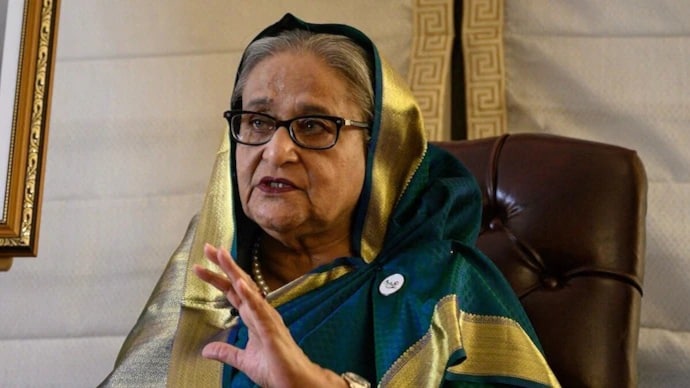
Her statement, sharp and emotional, marks a turning point in the political narrative surrounding her case. For months, Hasina had maintained silence as the legal proceedings unfolded in Dhaka. However, the announcement of the sentence has triggered one of her strongest responses since she left Bangladesh. Her remarks have now intensified debates over the credibility of the tribunal, the fairness of the interim government, and the future of democracy in the country.
Life in Exile and a Sudden Fall from Power
Sheikh Hasina’s exit from Bangladesh in August 2024 was one of the most dramatic developments in the country’s political history. After years of leading the government, her ouster came amid widespread unrest, large-scale protests, and intense political pressure. The interim government quickly took control and initiated a series of investigations and legal proceedings against Hasina and other top leaders of her party.
From the moment she reached New Delhi, Hasina maintained that her departure was forced and her safety was at risk. In multiple interactions since then, she has described the situation as a “constitutional breakdown” and a “systematic attack on democracy.” The recent verdict, she said, is the final confirmation of what she had been warning about for months: a targeted campaign to erase her political influence.
madubrainqu.com | wenaier.com | plugin-theme.com
applechon.com | thecreativita.com
Claims of a Flawed Tribunal Process
In her reaction, Hasina outlined several reasons why she believes the tribunal’s ruling lacks legitimacy. She alleged that the tribunal lacked independence and that its members faced pressure to deliver a predetermined verdict. According to her, the hearings were rushed, evidence was selectively presented, and defense rights were repeatedly restricted.
Hasina said the judgment “was written long before the trial even concluded,” pointing to procedural irregularities, limited access to her lawyers, and the refusal of the tribunal to consider key documents that she claimed would have disproved the allegations.
She also highlighted concerns about transparency, arguing that a legal process conducted under political pressure cannot produce fair or credible results. For her supporters, these claims reinforce the belief that the trial was orchestrated solely to bar her from returning to political life.
Accusations Against the Interim Government
In her remarks, Hasina accused the interim government, led by Muhammad Yunus, of intentionally misusing state institutions to pursue a political agenda. She claimed that the cases against her were a part of a “carefully executed plan” to weaken her party, dismantle her leadership, and reshape Bangladesh’s political landscape.
She argued that the government is using the judicial process as a political weapon and that the punishment handed down to her was designed not for justice but for political gain. According to Hasina, the interim leadership is focused on removing all forms of opposition and creating an environment in which it can consolidate power without challenge.
Her accusations also extend to the handling of media narratives. She stated that various state-controlled platforms and sympathetic groups have been shaping public perception in a way that portrays her as guilty before the trial even began. She called this an “information campaign” against her and her legacy.
A Deep Divide in Bangladesh’s Politics
The case has created one of the most significant political divisions in Bangladesh in recent years. Supporters of the interim government believe the tribunal’s decision represents progress toward holding former leaders accountable and reforming governance. They argue that the legal steps were necessary and that the tribunal was functioning independently.
However, Hasina’s party members and supporters have denounced the ruling as political persecution. They argue that she is being punished for her long-standing influence and her ability to mobilize wide national support. For them, the verdict is not just against Hasina but against the democratic fabric of the country.
Analysts believe the ruling may deepen political instability. The sentiment among Hasina’s supporters is strong, and many fear that the verdict could lead to renewed protests, disruptions, and a polarized environment that undermines the interim government’s legitimacy.
International Reactions and Concerns
Although Hasina did not discuss international responses in her statement, her sentencing has raised concerns across diplomatic circles. Several governments and global observers are reportedly watching the situation with caution. Questions are emerging about whether the trial met international legal standards and whether due process was followed.
Hasina emphasized that the world must recognize the dangers of a judicial system influenced by politics. She said the verdict sends a “dangerous message” to political leaders and opposition members, warning that anyone who challenges the current system could face similar consequences.
Impact on Bangladesh’s Governance and Future
The sentencing of a former prime minister under such tense political circumstances is likely to have long-term effects. Bangladesh is already navigating economic challenges, internal divisions, and uncertainties surrounding its political transition. Hasina’s case adds another layer of complexity.
The ruling may shape future elections, the structure of political alliances, and the direction of reforms. The credibility of the interim government will also be tested in the coming months, as domestic and international observers assess its handling of political dissent and judicial independence.
Hasina’s Position Going Forward
Despite the verdict, Sheikh Hasina remains defiant. She insisted that she will continue to fight the ruling through available legal channels and hopes for a fair reconsideration of the case. From exile, she has also pledged to keep speaking about what she describes as the “erosion of democratic values” in Bangladesh.
Her supporters believe she will continue to play a major role in shaping political discourse, even from outside the country. For them, she symbolizes stability, leadership, and decades of political presence.
Conclusion
Sheikh Hasina’s reaction to the death sentence marks a critical moment in Bangladesh’s ongoing political crisis. Her claims of a rigged tribunal and biased ruling have opened new debates about justice, fairness, and political influence in the nation’s institutions. As tensions rise and divisions deepen, Bangladesh enters a period of uncertainty, with the world watching closely to see how the situation unfolds.